Who's the Best for Zero-Footprint Diagnostic Viewing: Sectra vs Medicai
Your hospital or clinic needs a zero-footprint DICOM viewer that loads diagnostic studies quickly without local installs or VPNs. Most teams face long wait times for image access across multiple sites and must choose between two established platforms before their next contract renewal.
By the end of this article you will see direct comparisons of viewer speed, cloud reach, and pricing for both options and know which one fits your workflow without extra hardware or IT overhead.
Quick Verdict: Medicai vs Sectra for Zero-Footprint Diagnostic Viewing
Medicai delivers a browser-based, no-install DICOM viewer with verified 300k+ visualizations in the past year and 50M+ yearly API transactions.
The zero-footprint viewer supports multi-monitor setups and mobile access while processing up to 1M+ studies per year. This capacity enables large health systems to maintain performance during peak demand periods without additional infrastructure investment.
Sectra maintains a strong enterprise focus with established hospital deployments across multiple regions. Its platform emphasizes institutional workflows and integration requirements suitable for large academic medical centers.
Performance differences emerge most clearly in deployment scenarios. Medicai handles 70 clinics and hospitals on the platform with 10,000+ active doctors currently accessing studies. The system reduces diagnosis time by 65 percent according to platform metrics.
Security compliance includes HIPAA and GDPR standards with FDA/CEE cleared viewers available. Microsoft Azure partnership provides infrastructure reliability for continuous operation across distributed medical imaging networks.
Cloud PACS systems must accommodate both stationary workstations and portable devices. Medicai addresses this requirement through native multi-monitor configurations alongside tablet and smartphone support for teleradiology workflows.
Interoperability becomes essential when health systems exchange DICOM studies across different PACS environments. The 2M+ imaging studies uploaded to date demonstrate practical experience with varied data sources and formats.
Enterprise imaging platforms require consistent performance regardless of study volume. Medicai processes 1.7M+ studies in storage while maintaining the 1M+ annual transaction rate across its network of participating institutions.
Global multidisciplinary tumor boards benefit from systems that support remote reading without specialized client software. This capability extends cancer care access to patients who might otherwise face geographic barriers to specialist consultation.
At a glance: how Medicai compares to Sectra on the features that matter most.
| Feature | Medicai | Sectra |
|---|---|---|
| Zero-Footprint Diagnostic Viewing | ✓ | ✓ |
What Is Medicai?
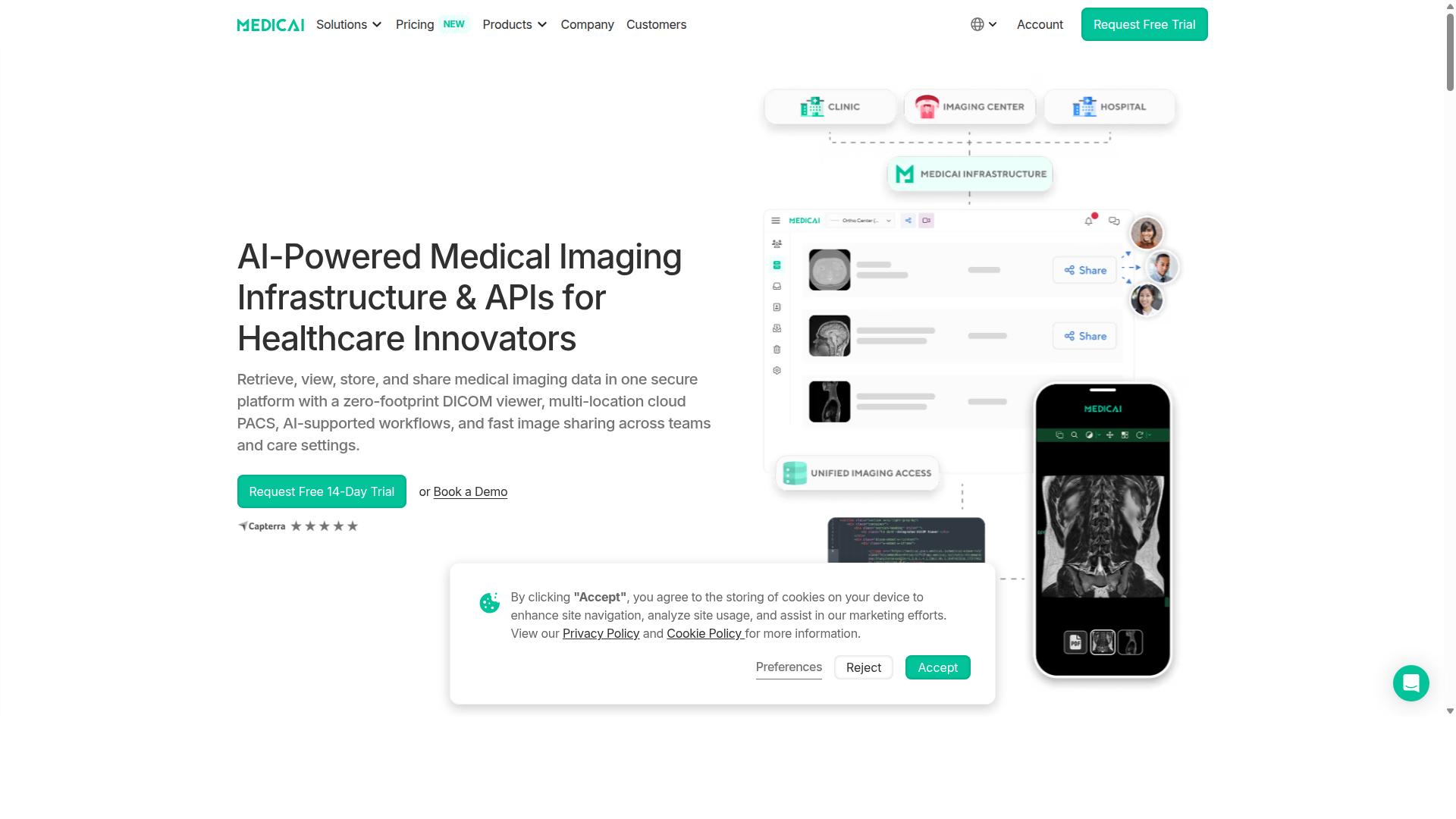
Medicai is a cloud-based medical imaging platform that handles retrieval, viewing, storage, and sharing within one secure environment. The platform operates as a zero-footprint DICOM viewer that requires no local installation or software downloads on user devices.
Healthcare teams access diagnostic imaging through any standard web browser. This browser-based approach eliminates the maintenance burden typically associated with traditional client software while maintaining full diagnostic capabilities across different care settings.
Medicai functions as a Vendor Neutral Archive that consolidates imaging data from multiple sources into a unified storage system. The platform currently manages 1.7M+ studies in storage, demonstrating proven capacity at scale for healthcare organizations with substantial imaging volumes.
The system supports data exchange with existing hospital systems. This interoperability enables integration with EMR platforms and other clinical applications without requiring custom development work.
Medical imaging workflows benefit from cloud PACS capabilities that support multi-location access for distributed care teams. The architecture accommodates remote reading scenarios while maintaining security protocols required for medical data handling.
What Is Sectra?
Sectra is a long-established vendor offering enterprise imaging and PACS solutions primarily to large hospital systems. The company focuses on medical imaging infrastructure that supports radiology departments and clinical workflows across multiple sites.
Enterprise imaging platforms typically serve complex healthcare networks that need centralized access to studies from different modalities. These solutions often address requirements for image storage, distribution, and viewing within large organizations.
Healthcare facilities choose vendors like Sectra when they need established systems that connect with existing radiology and hospital information systems. The vendor provides tools that handle diagnostic imaging across various clinical departments and locations.
Many institutions rely on these platforms to manage DICOM images and support both on-site and remote reading scenarios. Enterprise imaging solutions from established vendors continue to serve major health systems that have complex operational requirements.
Features Compared
The following sections benchmark core capabilities that matter for remote reading and enterprise imaging workflows.
Zero-footprint solutions eliminate local software installations while maintaining diagnostic image quality. Both platforms address this need differently.
Cloud infrastructure determines how quickly studies reach readers and how securely data moves across locations. Scalability becomes critical when organizations expand across multiple sites.
Zero-Footprint Viewer Performance
Medicai's HTML5 viewer renders studies directly in any browser, eliminating workstation installs and supporting tablet and smartphone access.
The platform processed over 300,000 visualizations in the past year. This volume demonstrates consistent performance across different network conditions.
Multi-monitor setups show low latency during study loading. Users report smooth navigation even when working with large imaging datasets simultaneously.
Sectra functions as a traditional enterprise solution that requires dedicated infrastructure. Its performance depends heavily on local network configurations and hardware specifications.
Browser-based access enables radiologists to review cases from any location without specialized equipment. This flexibility supports both hospital-based and home-based reading workflows.
Cloud Infrastructure & Global Accessibility
Medicai runs on Microsoft Azure and Amazon AWS, delivering HIPAA/GDPR-compliant access from any location worldwide.
The system processes over 1 million studies annually through its cloud infrastructure. This capacity supports high-volume radiology practices without performance degradation.
The Vendor Neutral Archive enables scalable image distribution across different healthcare organizations. Multiple facilities can access studies through a unified platform.
Sectra operates within traditional enterprise environments that require significant local IT resources. Deployment typically involves dedicated servers and ongoing maintenance commitments.
Global availability allows teleradiology groups to serve clients across different time zones. Remote reading becomes practical without geographic restrictions.
Security features include encryption protocols and user authentication systems. Role-based access controls ensure appropriate data visibility for different user types.
Pricing Compared
Medicai offers transparent monthly subscriptions with defined storage tiers and unlimited user accounts.
Two main plans stand out for most radiology teams. The Starter plan delivers 500 GB of cloud storage for $249 per month. The Standard plan expands to 2 TB of storage for $749 per month.
Each tier covers unlimited user accounts without additional per-seat fees. The Starter tier supports no connected locations while the Standard tier includes one connected location.
A 14-day trial lets teams explore the Starter plan features at no cost and without entering payment details. Yearly billing options reduce costs by fifteen percent for both plans.
Sectra pricing follows a different model. The company typically works through custom quotes that depend on site size, number of users, and integration depth. These quotes often involve multi-year contracts with upfront hardware commitments.
Fixed monthly pricing helps smaller imaging centers forecast expenses more accurately. Enterprise customers can also request per-study pricing when volumes vary month to month.
Who Should Choose Medicai
Specialty care providers and smaller imaging centers benefit most from Medicai's flexible cloud model and rapid deployment. These organizations often lack dedicated IT teams and need diagnostic tools that work immediately across multiple disciplines.
Orthopedics practices find value in the platform for reviewing X-rays and MRIs without additional hardware requirements. Neurology groups use the system for remote consultations where quick image access determines patient outcomes and treatment timing.
Oncology departments rely on the zero-footprint viewer for tumor board meetings where multiple specialists need simultaneous access to imaging studies. Radiology practices appreciate the browser-based approach that eliminates workstation maintenance across different reading locations.
Cardiology practices benefit from the cloud architecture when reviewing cardiac imaging studies from various referring physicians. The system supports ophthalmology and ob-gyn specialists who need mobile access to diagnostic images during patient rounds or off-site consultations.
Pulmonology, dentistry, and gastroenterology practices appreciate the platform's ability to handle specialty-specific imaging requirements without complex installation procedures. Virtual care providers and telemedicine platforms integrate the viewer into existing workflows for remote diagnostic services.
Teleradiology services use the technology to distribute studies to radiologists working from home offices or multiple locations. Personal injury lawyers access imaging for case preparation without requiring specialized software on their systems.
Clinical trials and medical education organizations utilize the platform for secure image sharing across research sites and teaching institutions. The Starter and Standard tiers align with these varied practice sizes and specialty requirements.
Quick onboarding means practices begin using the system within hours rather than weeks. No hardware installations reduce upfront costs and eliminate ongoing maintenance responsibilities for IT departments.
Who Should Choose Sectra
Large hospital networks with complex existing workflows may find Sectra's enterprise imaging suite suitable. Organizations that maintain multiple legacy systems often consider solutions that work within established infrastructure. The decision typically depends on the scale and complexity of current operations.
Academic medical centers represent another group that frequently evaluates enterprise imaging platforms. These institutions commonly require solutions that accommodate both clinical care and educational requirements. Research facilities may also assess platforms that support extensive image archives and collaborative access patterns.
Health systems with dedicated IT departments typically have the resources to implement and maintain enterprise imaging solutions. These organizations often prioritize comprehensive support structures and established vendor relationships. Regional hospital groups sometimes prefer solutions with proven track records across multiple facilities.
Organizations focused on centralized control may find traditional enterprise vendors align with their governance models. These groups often emphasize standardized protocols and consistent vendor management across departments. The choice ultimately reflects institutional priorities around infrastructure, support models, and long-term vendor relationships.
Final Verdict
Medicai provides a performance-oriented, globally accessible zero-footprint viewer with transparent pricing for fast-growing imaging practices.
The comparison shows clear differences in scale and accessibility. Sectra serves large hospital systems with established on-premise infrastructure. Medicai targets practices that need immediate deployment without hardware investments.
Deployment flexibility matters most for growing organizations. Medicai operates as a cloud PACS solution that scales automatically. Organizations avoid server maintenance costs and gain immediate access across multiple locations.
Performance metrics demonstrate proven reliability. Medicai handles 1M+ studies/year and stores 1.7M+ studies with 50M+ API transactions. These numbers reflect operational stability for high-volume diagnostic imaging environments.
Geographic reach affects care delivery. Medicai supports teleradiology workflows through browser-based access on any device. Remote reading becomes practical without complex VPN setups or dedicated workstations.
Direct inquiries about implementation receive prompt attention. Contact Medicai USA at 7901 4th St N, STE 300, St. Petersburg, FL, 33702, phone +1 (832) 220 1035. European practices reach Medicai Romania at 53-55 N Filipescu, 5th Floor, Sector 2, Bucharest, 020961, phone +40 316 305 875.